From Trade Barriers to Trade Bridges
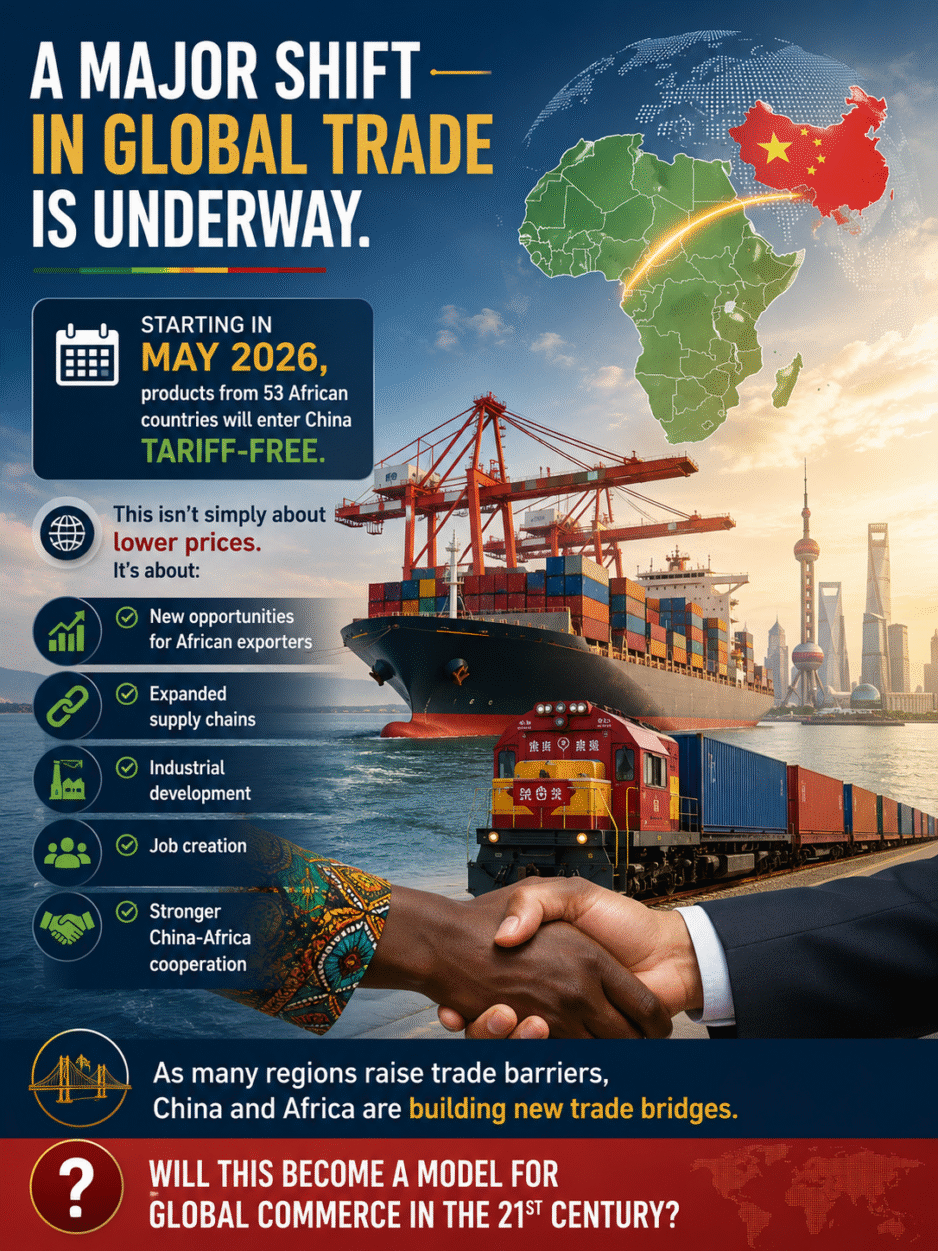
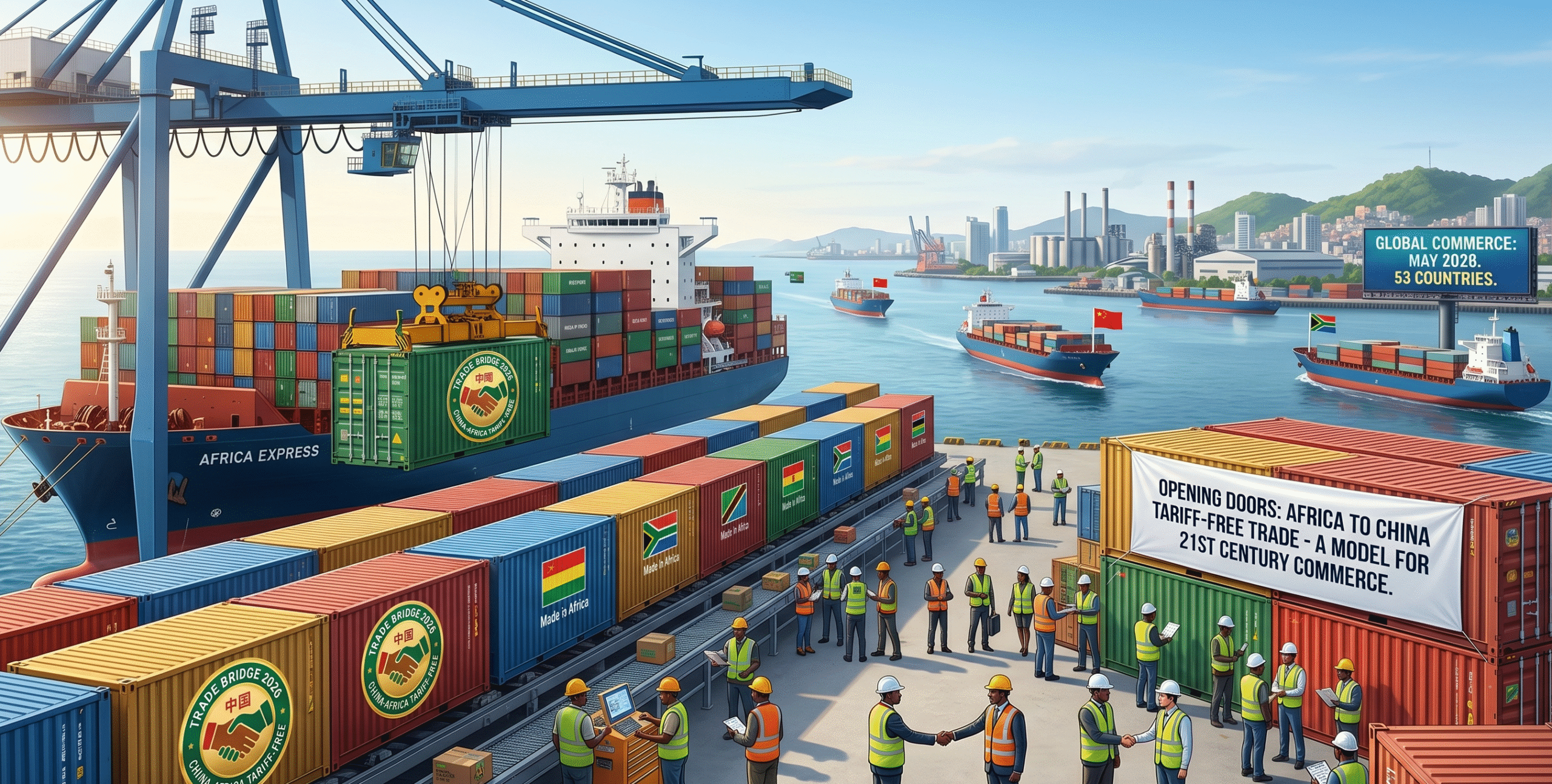
At a time when many nations are strengthening trade barriers and pursuing protectionist policies, a remarkable shift is taking place between China and Africa. Beginning in May 2026, products from 53 African countries will be able to enter China with zero tariffs, marking one of the most significant trade liberalization initiatives in recent decades.
This policy is more than a simple reduction of import duties. It represents a strategic effort to deepen economic cooperation, strengthen supply chains, encourage industrial development, and create new opportunities for both African producers and Chinese consumers. More importantly, it may provide a blueprint for how international trade can evolve in an increasingly interconnected yet uncertain world.
As global businesses search for resilient supply chains and new growth markets, the China-Africa trade partnership is attracting growing attention from economists, investors, policymakers, and business leaders alike.
Africa’s Untapped Agricultural Potential
One of the most compelling aspects of this initiative is the enormous agricultural potential that exists across the African continent.
Many African countries possess ideal climates, fertile land, and abundant natural resources that support the production of high-quality agricultural products. From Kenya’s avocados and Tanzania’s sesame seeds to Uganda’s coffee and West Africa’s tropical fruits, the continent produces a vast range of commodities that are highly sought after in international markets.
Yet for many years, significant tariffs and trade barriers limited access to major consumer markets. While local producers could generate substantial quantities of agricultural products, reaching large international buyers often proved difficult and expensive.
The new zero-tariff framework changes this equation dramatically.
By removing import duties, African exporters gain a significant competitive advantage when entering one of the world’s largest consumer markets. Products that were previously burdened by tariffs can now reach Chinese consumers at more attractive prices, creating new opportunities for farmers, cooperatives, processors, and exporters throughout Africa.
For consumers in China, the result will be greater product diversity and access to a wider selection of high-quality goods. For African producers, it opens the door to unprecedented market expansion.
A Long-Term Strategy Decades in the Making
While the May 2026 policy announcement has captured international headlines, the initiative is actually the culmination of a much longer process.
China’s preferential trade policies toward African nations began decades ago. Over time, tariff reductions gradually expanded to cover larger categories of products and a growing number of participating countries.
A major milestone occurred in 2024 when China introduced 100 percent tariff-free treatment for products originating from 33 of Africa’s least-developed nations. The economic impact was immediate and measurable.
Imports from these participating countries experienced strong growth, particularly within agricultural sectors. Coffee exports increased substantially, cocoa shipments surged, and several African economies experienced improved access to international markets.
The positive outcomes of these earlier initiatives provided a strong foundation for the broader expansion now scheduled for 2026.
Rather than being an isolated policy decision, the new framework reflects a long-term strategic vision focused on deeper economic integration between China and Africa.
Moving Beyond Raw Materials
Perhaps the most important aspect of the initiative is that it extends beyond simply exporting raw commodities.
Historically, many developing economies have relied heavily on exporting unprocessed raw materials while importing higher-value manufactured products. This model often limits economic growth and reduces opportunities for industrial development.
The new trade framework creates incentives for a different approach.
Because processed goods can also benefit from tariff-free access, businesses have stronger reasons to invest in local manufacturing and value-added production within African countries.
For example, rather than exporting raw sesame seeds, companies can establish processing facilities that produce sesame oil. Instead of shipping raw agricultural commodities, local industries can develop packaging, food processing, and manufacturing capabilities that create additional value before products reach international markets.
This transition from raw material exports to value-added production has the potential to generate several benefits:
- Increased employment opportunities
- Higher wages and skill development
- Technology transfer
- Stronger local industries
- Greater economic resilience
For African economies seeking long-term industrialization, these developments may prove even more important than the tariff reductions themselves.
Demographics Driving Future Growth
Another key factor behind the growing importance of Africa is its demographic profile.
Africa is currently the youngest continent in the world. Approximately 60 percent of its population is under the age of 25, creating one of the largest emerging workforces globally.
This youthful population represents both an opportunity and a challenge.
On one hand, millions of young people are entering the labor market each year, creating significant demand for jobs, education, and economic opportunity. On the other hand, countries must generate sufficient industrial growth and investment to absorb this expanding workforce.
The China-Africa partnership addresses this challenge by connecting investment capital, manufacturing expertise, and market access with Africa’s growing labor force.
Beyond traditional industries, cooperation is also expanding into technology, telecommunications, digital payments, e-commerce, and infrastructure development.
Chinese companies operating across Africa are increasingly building local ecosystems that include distribution networks, digital platforms, financial services, and manufacturing facilities. These investments contribute not only to economic growth but also to the development of broader business capabilities across the continent.
Strengthening Global Supply Chains
The global disruptions of recent years have highlighted the importance of supply chain resilience.
Businesses worldwide have faced challenges ranging from geopolitical tensions and trade disputes to logistics bottlenecks and supply shortages. As a result, organizations are increasingly seeking diversified sourcing strategies and alternative supply networks.
The China-Africa trade initiative aligns closely with this objective.
By strengthening commercial links with African producers, China gains access to a broader range of agricultural products, raw materials, and manufactured goods. This diversification reduces dependence on a limited number of suppliers and enhances long-term supply chain security.
Although China is expected to forgo approximately $1.4 billion in short-term tariff revenue, many analysts view this as a strategic investment rather than a financial loss.
The long-term benefits of stronger trade relationships, diversified imports, and more resilient supply chains may significantly outweigh the immediate reduction in customs revenue.
In an increasingly uncertain global environment, resilience has become a critical competitive advantage.
Challenges That Still Remain
Despite the enormous opportunities created by tariff-free access, important challenges remain for African exporters.
Market access alone does not guarantee commercial success.
To fully capitalize on these opportunities, businesses must address several key obstacles:
Scaling Production
Many African producers operate on a relatively small scale. Meeting the demands of a market with more than 1.4 billion consumers requires substantial increases in production capacity.
Infrastructure Development
Efficient transportation networks, ports, logistics systems, and energy infrastructure are essential for supporting export growth.
Quality Standards
Exporters must comply with increasingly rigorous quality, packaging, safety, and regulatory requirements.
Supply Chain Transparency
International buyers increasingly require traceability systems that verify product origin, quality, and sustainability standards.
Workforce Development
Continued investment in education, training, and technical skills will be necessary to support industrial expansion.
Addressing these challenges will require cooperation among governments, businesses, investors, and development organizations.
A Potential Blueprint for the Future
The significance of China’s zero-tariff initiative extends far beyond bilateral trade statistics.
At a time when many economies are becoming more inward-looking, this policy represents a different vision—one built on openness, cooperation, and long-term economic partnership.
By lowering barriers and encouraging industrial development, the initiative creates opportunities for both sides. African nations gain improved access to one of the world’s largest markets, while China strengthens its supply chains and expands economic relationships with one of the fastest-growing regions on the planet.
Whether this model ultimately becomes a blueprint for global trade remains to be seen. However, its impact will likely be felt across industries ranging from agriculture and manufacturing to technology and logistics.
For business leaders, investors, and policymakers, the message is clear: Africa’s role in global commerce is expanding rapidly, and the China-Africa partnership may become one of the defining economic relationships of the 21st century.
As these new trade flows begin to reshape markets, supply chains, and industries, organizations that understand and engage with this transformation early will be best positioned to capture the opportunities that lie ahead.
Karlheinz Zuerl
The System Doctor for your Profit Growth in Europe and BRICS+ countries
CEO of GTEC (German Technology and Engineering Cooperation)
Co-Partner of BRICS Project Network
Book Author

Where we speak in public:
https://leanbase.de/latc/speakers/2026-karlheinz-zuerl
CLICK here to see more Ai articles.
Experts in the Automotive Industry Asia
You need one, but don`t want to hire one permanently?
Our solution: To rent our experts
- On pay-to-use basis
- Completely flexible
- Contract can be cancelled any time
Clearly represented reports and dashboards inclusive!