
Trend 1 of 5: LFP Cells on the Rise

GTEC (German Technology and Engineering Cooperation) has supported Western companies in Asia since 2005. Mostly in automotive, machinery, environmental technologies, business development, profitable investments, and management. Now, for the first time in history, we put all our knowledge and skills into our GTEC Profit Growth Academy.

As you cannot eat an elephant in one step, let us break down our insider knowledge into small pieces for easy digestion. If you want to get all the newsletters of this series, please write an email to contact@gtec.asia.

Adapt to the new trends in mobility in Asia

Trend 1 of 5: LFP Cells on the Rise

LFP stands for lithium‑iron‑phosphate — a battery chemistry that has rapidly become a serious challenger to the former standard, NMC (nickel‑manganese‑cobalt). In China, more LFP cells are already being produced than NMC for domestic cars, and manufacturers like VW and Mercedes plan to use LFP in their smaller models.

Source: https://en.wikipedia.org/wiki/Lithium_iron_phosphate

Why LFP?

Here are the benefits and the trade-offs:

  • Cheaper: LFP cells cost less to make because they avoid expensive, scarce heavy metals.
  • More robust and safer: LFP is thermally stable, which reduces the risk of fires.
  • Lower energy density: LFP operates at a slightly lower voltage, so it stores less energy per volume than some NMC cells.
  • Charging behavior: Traditionally, LFP charges more slowly than some NMC chemistries — but manufacturers are working hard to close that gap.

How CATL is improving LFP:

CATL is doubling down on LFP and aims to significantly speed up charging. The key is improved electrode materials — the company hasn’t disclosed all details. If CATL’s improvements were delivered as promised, LFP could take even more market share from NMC, which is typically about 20% more expensive to produce due to the complex extraction and processing of nickel and cobalt.

Source: https://www.evlithium.com/catl-battery-cell/catl-lifepo4-battery-cell-161ah.html

Trends in the NMC (Lithium Nickel Manganese Cobalt Oxide) world:

NMC chemistry is shifting away from cobalt because cobalt mining raises environmental and social concerns, and the metal is scarce. Tesla, for example, has cut cobalt dramatically — in their 4680 cells, the ratio favors much more nickel and far less cobalt and manganese. Tesla also uses other mixes like NCA (nickel‑cobalt‑aluminum) and even LFP in some models.

Source: https://diyguru.org/term/nmc-batteries/

New LFP variants LMFP:

A next step forward is LMFP (lithium‑manganese‑iron‑phosphate): manganese replaces part of the iron in the cathode to boost energy density. Companies such as GOTION (a VW partner) started producing higher‑energy LMFP cells from 2024.

Source: https://www.gotion.com.cn/news/newsdetails/1101.html

What does this mean for car buyers?

  • More automakers choose LFP: Toyota, BYD, VW, and others are expanding LFP offerings.
  • Cost advantage: batteries (and thus cars) can be cheaper.
  • Wider adoption: even SUVs that once used NMC are being shifted to LFP over time.

In short:

LFP is improving fast and spreading widely — it’s cheaper, safer, and getting more capable. That makes it a defining trend for the next generation of EV batteries.

Follow us to catch the next breakthroughs in battery technology as they happen.

We will explore these issues. Please follow us to stay updated.

Karlheinz Zuerl

The System Doctor for your Profit Growth in Europe and BRICS+ countries

CEO of GTEC (German Technology and Engineering Cooperation)

Co-Partner of BRICS Project Network

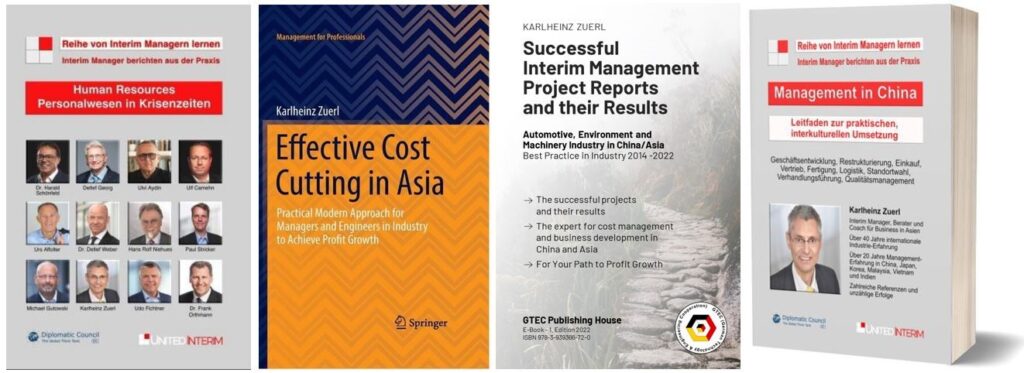
Book Author
Karlheinz Zuerl

The System Doctor for your Profit Growth in Europe and BRICS+ countries

CEO of GTEC (German Technology and Engineering Cooperation)

Co-Partner of BRICS Project Network

Book Author

Where we speak in public:

https://leanbase.de/latc/speakers/2026-karlheinz-zuerl

https://leanbase.de/latc/talks/2026-erfolgreich-im-shopfloor-in-china-losungen-die-sie-begeistern-werden

Experts in the Automotive Industry Asia

You need one, but don`t want to hire one permanently?

Our solution: To rent our experts

  • On pay-to-use basis
  • Completely flexible
  • Contract can be cancelled any time

Clearly represented reports and dashboards inclusive!


Insider Knowledge Automotive Asia

GTEC (German Technology and Engineering Cooperation) has supported Western companies in Asia since 2005. Mostly in automotive, machinery, environmental technologies, business development, profitable investments, and management. Now, for the first time in history, we put all our knowledge and skills into our GTEC Profit Growth Academy.

As you cannot eat an elephant in one step, let us break down our insider knowledge into small pieces for easy digestion. If you want to get all the newsletters of this series, please write an email to contact@gtec.asia.

Adapt to the new trends in mobility in Asia

What will traction batteries in EVs be able to do soon—and how are they built? We took a closer look. Stay tuned to keep ahead of the curve.

First Example: BYD’s “Blade” Battery. In its flagship HAN, BYD introduced the Blade battery. It ditches traditional modules: instead of many small bricks, it uses long cells that span the battery tray sideways. About 100–120 cells are spread across the pack’s width. This layout means roughly 85% of the battery is active material, the part that stores energy. Why it matters:

  • Denser use of space
  • Fewer non-essential parts
  • Better pack weight and packaging efficiency

Source: https://en.byd.com/news_category/press-release/

https://www.instagram.com/reel/DQ4AwbVjd5y/ 23.11.2025

Second Example: CATL’s “Shenxing” Battery. CATL keeps unveiling new cell formats. Shenxing promises a leap in charge/discharge speed: up to 80% state of charge in about ten minutes—already in series production. The secret is advanced LFP chemistry. Key innovations:

  • Densified cathode particle architecture packs more active material into less space.
  • A 3D honeycomb anode boosts energy density while taming expansion and contraction during charge and discharge.
  • Smart casing and cell geometry maximize interior volume; CATL’s module-free CTP 3.0 saves both space and weight.

Cell-to-Pack (sometimes referred to as C2P or CTP) is a new battery design approach that eliminates intermediate modules and connects the battery cells directly to the pack. This reduces the weight, size, and cost of the battery and increases its energy density and efficiency.

What does this mean for drivers:

  • Faster charging: shorter, simpler pit stops.
  • More range and space efficiency: more energy without a bigger battery bay.
  • Fewer modules: cleaner design that can cut cost, weight, and failure points.

Source: https://www.instagram.com/p/DOWSFbtgV0Z/, 23.11.2025

Bottom line: Battery design shifts from many small modules to larger, space-optimized cells and packs—paired with new chemistries that charge faster and store more energy.

Follow us to catch the next breakthroughs in battery technology as they happen.

For example, what will the traction batteries of electric vehicles look like soon? How will they be manufactured?

We will explore these issues. Please follow us to stay updated.

Karlheinz Zuerl

The System Doctor for your Profit Growth in Europe and BRICS+ countries

CEO of GTEC (German Technology and Engineering Cooperation)

Co-Partner of BRICS Project Network

Book Author

Where we speak in public:

https://leanbase.de/latc/speakers/2026-karlheinz-zuerl

https://leanbase.de/latc/talks/2026-erfolgreich-im-shopfloor-in-china-losungen-die-sie-begeistern-werden

Experts in the Automotive Industry Asia

You need one, but don`t want to hire one permanently?

Our solution: To rent our experts

  • On pay-to-use basis
  • Completely flexible
  • Contract can be cancelled any time

Clearly represented reports and dashboards inclusive!


China’s Electricity: The Unlimited Coffee Pot Powering the Global AI Race

Executive summary

China built electricity like someone stocking a supermarket for a population the size of several Europes — in advance. That “build-first” approach means cheap, abundant power is effectively an input subsidy for everything from factories to AI data centers. Western countries operate the opposite way: build only when demand is proven, let private capital chase quick returns, and then wonder why the lights flicker when AI servers wake up. Result: China runs with a structural advantage in industrial-scale AI deployment.

What makes the difference?

Imagine walking into an office where the espresso machine is always on, the water jug never runs dry, and no one must fight for the last power socket. That’s Shenzhen (South China) — except swap coffee for megawatts. In parts of Europe and the U.S., it often feels like the espresso machine is locked behind ten permits and a referendum.

Why China’s approach looks like a strategy, not an accident?

  • Build-first mentality: Local planners and mayors lay infrastructure before factories arrive. The logic is that the industry won’t come unless the lights, roads, and ports are ready. So, they build them.
  • Overcapacity as insurance: China’s electricity system typically runs with very large reserve margins and frequent new capacity additions. The result: electricity is available when a factory or hyperscale data center needs it.
  • Industrial AI everywhere: From ore-sorting at mines to predictive maintenance on the shop floor and generative design in R&D, AI is embedded across the supply chain — and it doesn’t stall for lack of power.
  • Scale feedback loop: Cheap, plentiful energy attracts investment → investment creates demand → planners build more supply. Boom.

The West’s bottlenecks — told by political economy

  • Permits and politics: Building a new generation and transmission faces long public processes and local opposition.
  • Private capital incentives: Investors want near-term returns. Infrastructure that pays over decades is a harder sell.
  • Supply chain & time: Nuclear takes a decade+; new gas plants need components and permitting; even wind/solar projects can be slowed or canceled.
  • The math: Analysts warn that AI data-center demand could jump manyfold in a decade. Without massive, fast power buildout, household bills and political backlash follow.

A few vivid comparisons

  • China: Adds roughly “one Germany of demand” per year and invests roughly “two Germanies of supply” — a narrative shorthand for scale and speed.
  • U.S./EU: Reserve margins are far smaller; private investment patterns and politics slow capacity growth; the result is potential shortages when AI demand surges.

Why should investors, tech execs, and policymakers care?

  • Competitive advantage: If you run data centers, fabs, or factories, power availability and predictability matter as much as labor or logistics.
  • Risk to AI growth: The “Magnificent 7” and other big cloud players depend on power at scale

Takeaways (make variants out of these six takeaways with your posts/articles/presentations. Choose only one for one article)

  1. Professional/authoritative

For reliable, on-the-ground intelligence from Asia and BRICS to guide smarter investments and stronger profit growth, follow my channels or contact me directly.

  1. Punchy / LinkedIn‑friendly (recommended)

Want real, front-line insights from Asia and the BRICS to spot profitable opportunities before others do? Follow me or DM for actionable intelligence that drives growth.

  1. Urgent / conversion‑focused

Don’t invest blindly. Get the true picture from Asia and BRICS to make better bets and boost returns — follow my channels or book a consultation today.

  1. Corporate / consulting tone

For tailored market intelligence from Asia and BRICS to support your investment strategy and sustainable profit growth, contact me or visit our website.

  1. Short tagline / bold

Asia & BRICS insights: Smarter investments. Bigger profits. Follow or contact me.

  1. Friendly/human

If you want honest, on-the-ground insight from Asia and BRICS to power smarter investments and real profit growth, follow my channels or drop me a message — I’ll share what’s happening.

Experts in the Automotive Industry Asia

You need one, but don`t want to hire one permanently?

Our solution: To rent our experts

  • On pay-to-use basis
  • Completely flexible
  • Contract can be cancelled any time

Clearly represented reports and dashboards inclusive!